

Recognising Multiple Sclerosis: Early Symptoms, Diagnosis and Treatment Approaches
For many people, multiple sclerosis (MS) begins subtly.
It may start with tingling in the hands or blurred vision that comes and goes. But other times, it could be unusual fatigue or dizziness that is difficult to explain. Because these symptoms can appear intermittently or resemble those of stress and exhaustion, they are often overlooked in the early stages.
Yet recognising these neurological changes early can make a meaningful difference. Advances in imaging, diagnostic criteria, and multiple sclerosis treatments mean that MS can often be identified earlier than before, allowing patients to access treatment sooner. An early MS diagnosis not only helps people make sense of unexplained symptoms but may also enable earlier access to treatment and better management of disease activity over time.
At Neurology International, Dr Mohammad Tauqeer Ahmad works with patients experiencing neurological symptoms, including those related to multiple sclerosis. Through early assessment, accurate diagnosis and personalised treatment approaches, patients can better understand their condition and access appropriate care earlier in their disease journey.
Today, advances in MS treatment, including high-efficacy therapies, are helping many patients manage the disease more effectively and maintain their independence for longer.
What is multiple sclerosis?
Multiple sclerosis is a chronic autoimmune condition that affects the brain and spinal cord. It occurs when the immune system mistakenly attacks the myelin sheath - the protective covering around nerve fibres that helps nerve signals travel efficiently between the brain and body.
This damage affects how signals travel through the nervous system. Over time, the disruption can contribute to a wide range of neurological symptoms, which may appear differently from one patient to another.
How MS affects nerve communication
For those with multiple sclerosis, damage to the myelin sheath disrupts how nerve signals travel between the brain and body.
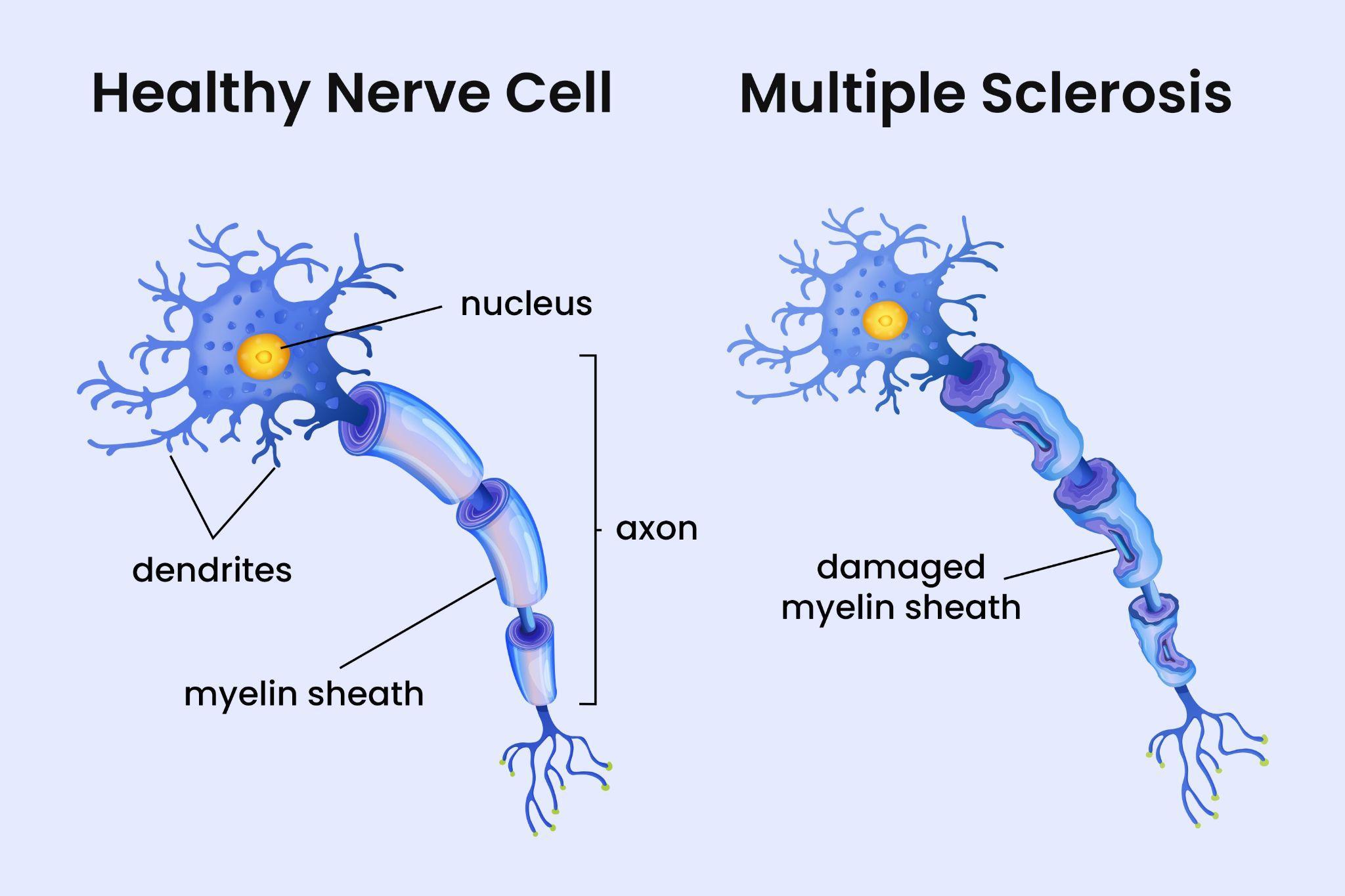
Because these changes can affect different parts of the nervous system, symptoms often:
- appear gradually
- come and go unpredictably
- vary significantly between patients
Some individuals may experience mild neurological symptoms for months before seeking medical attention, especially if symptoms temporarily improve on their own.
Since MS affects different parts of the nervous system, no two patients experience the condition in exactly the same way.
What are the early symptoms of multiple sclerosis?
Early multiple sclerosis symptoms may be easy to dismiss - especially in younger adults - but they should not be ignored if they recur or worsen over time.
Common early symptoms include:
- Numbness or tingling sensations
- Blurred or double vision
- Loss of colour vision
- Dizziness or balance difficulties
- Weakness or stiffness in the limbs
- Fatigue that feels disproportionate to activity levels
- Difficulty walking steadily
- Slurred speech
- Memory problems or difficulties concentrating (brain fog)
- Bladder or bowel changes
For some patients, symptoms may disappear temporarily before returning again later. This pattern can make diagnosis more challenging during the earlier stages of the disease.
What causes multiple sclerosis?
The exact causes of multiple sclerosis are still being researched, but current evidence suggests the condition develops through a combination of immune, genetic, and environmental factors.
Potential contributing factors include:
- Abnormal immune system activity
- Family history or genetic predisposition
- Low levels of vitamin D
- Previous viral infections, including Epstein-Barr virus
MS is not contagious and is not caused by stress alone or lifestyle choices.
When should you see a neurologist?
Neurological symptoms that recur, progress or interfere with daily life should be evaluated by a medical professional.
You should consider seeing a neurologist if you experience:
- Persistent numbness or tingling
- Recurrent dizziness
- Blurred or double vision
- Unexplained weakness
- Walking or balance difficulties
- Ongoing neurological symptoms affecting daily activities
- Severe fatigue without a clear explanation
When these symptoms persist or recur, early evaluation is important. Although conditions like multiple sclerosis may require detailed assessment and monitoring to confirm, seeking medical attention earlier can help patients reach a diagnosis sooner and begin appropriate treatment if needed.
How is multiple sclerosis diagnosed?
An accurate MS diagnosis requires a specialist neurological assessment.
There is currently no single test that confirms multiple sclerosis on its own. Instead, diagnosis involves evaluating symptoms, neurological findings and imaging results together.
A neurologist may:
- Review your medical history and symptoms
- Perform a neurological examination
- Order MRI scans of the brain and spinal cord
- Assess for inflammation or nerve damage
- Recommend additional investigations, including cerebrospinal fluid analysis, if necessary
MRI imaging plays an important role in identifying lesions or areas of inflammation associated with MS.
Because other neurological conditions can resemble multiple sclerosis, careful assessment is important to rule out alternative causes before confirming a diagnosis.
What are the main types of multiple sclerosis?
There are several forms of multiple sclerosis, and understanding the different types of MS helps guide treatment decisions.
1. Relapsing-Remitting Multiple Sclerosis (RRMS)
Relapsing-remitting MS (RRMS) is the most common type of MS.
Patients experience episodes of new or worsening neurological symptoms known as relapses, that are followed by periods of partial or complete recovery, called remissions. Symptoms may improve between relapses, although disease activity can still continue in the background.
2. Primary Progressive Multiple Sclerosis (PPMS)
In primary progressive MS (PPMS), symptoms gradually worsen over time without distinct relapses or remissions.
Patients may notice:
- Increasing difficulty walking
- Progressive weakness
- Gradual mobility changes
- Slow accumulation of disability
Unlike relapsing forms of multiple sclerosis, PPMS tends to affect mobility and physical function earlier in the disease course. Some patients describe a gradual heaviness in the legs, reduced walking endurance, or increasing effort needed for everyday movements.
Because the changes can develop steadily rather than suddenly, PPMS may affect daily routines in less obvious but cumulative ways over time. Activities such as climbing stairs, walking longer distances, or maintaining balance may become progressively more challenging.
PPMS also requires a different long-term management approach, with treatment often focused on slowing progression, preserving function, and supporting mobility and independence as much as possible. Early evaluation by a neurologist can help patients access appropriate treatment, rehabilitation, and monitoring sooner.
3. Secondary Progressive Multiple Sclerosis (SPMS)
Some patients who begin with relapsing-remitting MS (RRMS) may later transition into secondary progressive multiple sclerosis (SPMS), where symptoms and disability gradually worsen over time, even outside of distinct relapses.
This progression can vary between individuals, but may involve:
- Increasing difficulty with mobility or balance
- Greater fatigue or muscle weakness
- More persistent neurological symptoms
- Changes that have a greater impact on daily activities over time
While SPMS can sound concerning, earlier diagnosis and appropriate multiple sclerosis treatment may help slow progression and support long-term disease management. Regular monitoring by a neurologist is important in identifying changes early and adjusting treatment when needed.
Why does early diagnosis matter in MS?
Inflammation and nerve damage can occur even when symptoms appear mild or improve after a relapse. While patients may feel well between episodes, disease activity may continue in the background. This is why recognising symptoms and seeking medical attention promptly can be important in helping preserve neurological function over time.
Early diagnosis may help patients:
- Access treatment sooner
- Reduce future relapses
- Limit new inflammatory lesions
- Slow disability progression
- Preserve neurological function for longer
Modern MS care focuses on identifying disease activity as early as possible and intervening before significant disability develops.
What treatments are available for multiple sclerosis?
Although there is currently no cure for multiple sclerosis, there are effective treatment approaches that can help manage disease activity and symptoms.
Treatment options may include:
- Disease-modifying therapies (DMTs)
- Corticosteroids for relapses
- Physiotherapy and rehabilitation
- Symptom management
- High-efficacy treatments (HETs)
Treatment plans are individualised based on:
- Type of MS
- Disease activity
- MRI findings
- Symptom severity
- Patient lifestyle and treatment goals
What are high-efficacy treatments for MS?
High-efficacy treatments (HETs) are therapies designed to more strongly suppress MS disease activity and reduce the risk of relapses, new lesions and disability progression.
HETs aim to reduce relapses and limit ongoing disease activity, helping to protect neurological function over time. Increasingly, treatment approaches are considering earlier intervention for appropriate patients to support better long-term disease control.
Potential benefits of high-efficacy treatment may include:
- Reduced relapse frequency
- Fewer new MRI lesions
- Slower disability progression
- Better long-term disease control
- Preservation of mobility and independence
Treatment decisions are highly individual, and patients should discuss the most appropriate approach with their neurologist.
For many patients, the most important goal of treatment is to preserve neurological function and reduce the risk of future disability. Earlier discussions about treatment options may help patients make informed decisions about managing their condition over the long term.
Living with multiple sclerosis
A multiple sclerosis diagnosis can be distressing, especially for patients navigating work, family responsibilities and long-term uncertainty simultaneously.
However, MS affects every individual differently, and many patients continue leading active and independent lives with appropriate medical support.
Long-term management may include:
- Regular neurologist follow-ups
- Ongoing treatment monitoring
- Physiotherapy and rehabilitation
- Exercise and lifestyle adjustments
- Emotional and psychological support
Advances in diagnosis and treatment have significantly improved outcomes for many people living with multiple sclerosis today.
Symptoms such as numbness, blurred vision, dizziness, unexplained fatigue or brain fog can be easy to dismiss. However, when these symptoms recur or persist, early evaluation may help patients reach a diagnosis sooner and access appropriate treatment earlier.
Dr Mohammad Tauqeer Ahmad from Neurology International provides neurological assessments and personalised care for patients experiencing symptoms related to multiple sclerosis and other neurological conditions.
FAQ
1. What are the first signs of multiple sclerosis?
Early signs of multiple sclerosis may include numbness, tingling, blurred vision, dizziness, fatigue and balance difficulties. Symptoms can vary significantly from person to person.
2. Can multiple sclerosis symptoms come and go?
Yes. Some MS symptoms may improve temporarily before returning later, especially in relapsing forms of multiple sclerosis.
3. How is multiple sclerosis diagnosed?
MS is diagnosed through neurological assessment, MRI imaging and additional investigations performed by a neurologist.
4. Why is early diagnosis important in multiple sclerosis?
Early diagnosis may help patients access treatment sooner, reduce future relapses, limit disease activity and preserve neurological function for longer.
5. Does early treatment matter in multiple sclerosis?
Research increasingly suggests that earlier intervention for appropriate patients may help improve long-term disease control and reduce the risk of future disability progression.
6. Who should I consult if I suspect I have multiple sclerosis?
Patients experiencing neurological symptoms suggestive of MS should consult a neurologist experienced in diagnosing and managing multiple sclerosis.
References
- National Neuroscience Institute. (n.d.). Multiple sclerosis. Retrieved May 15, 2026, from https://www.nni.com.sg/symptoms-treatments/view-all.conditionsTreatmentDetails.
- Thompson AJ, Baranzini SE, Geurts J, Hemmer B, Ciccarelli O. Diagnosis of multiple sclerosis: 2024 revisions of the McDonald criteria. Lancet Neurology. 2024.
- Selmaj K, Cree BAC, Barnett M, Thompson A, Hartung HP. Multiple sclerosis: time for early treatment with high-efficacy drugs. J Neurol. 2024 Jan;271(1):105-115. doi:10.1007/s00415-023-11969-8.
- Bjornevik K, Cortese M, Healy BC, et al. Longitudinal analysis reveals high prevalence of Epstein-Barr virus associated with multiple sclerosis. Science. 2022;375(6578):296-301. doi:10.1126/science.abj8222.
- Munger KL, Levin LI, Hollis BW, Howard NS, Ascherio A. Serum 25-hydroxyvitamin D levels and risk of multiple sclerosis. JAMA. 2006;296(23):2832-2838. doi:10.1001/jama.296.23.2832.
- Multiple Sclerosis International Federation. What is MS? Retrieved May 15, 2026, from https://www.msif.org/about-ms/what-is-ms/.
- National Multiple Sclerosis Society. Types of Multiple Sclerosis. Retrieved May 15, 2026, from https://www.nationalmssociety.org/What-is-MS/Types-of-MS.